

Watch this on Youtube
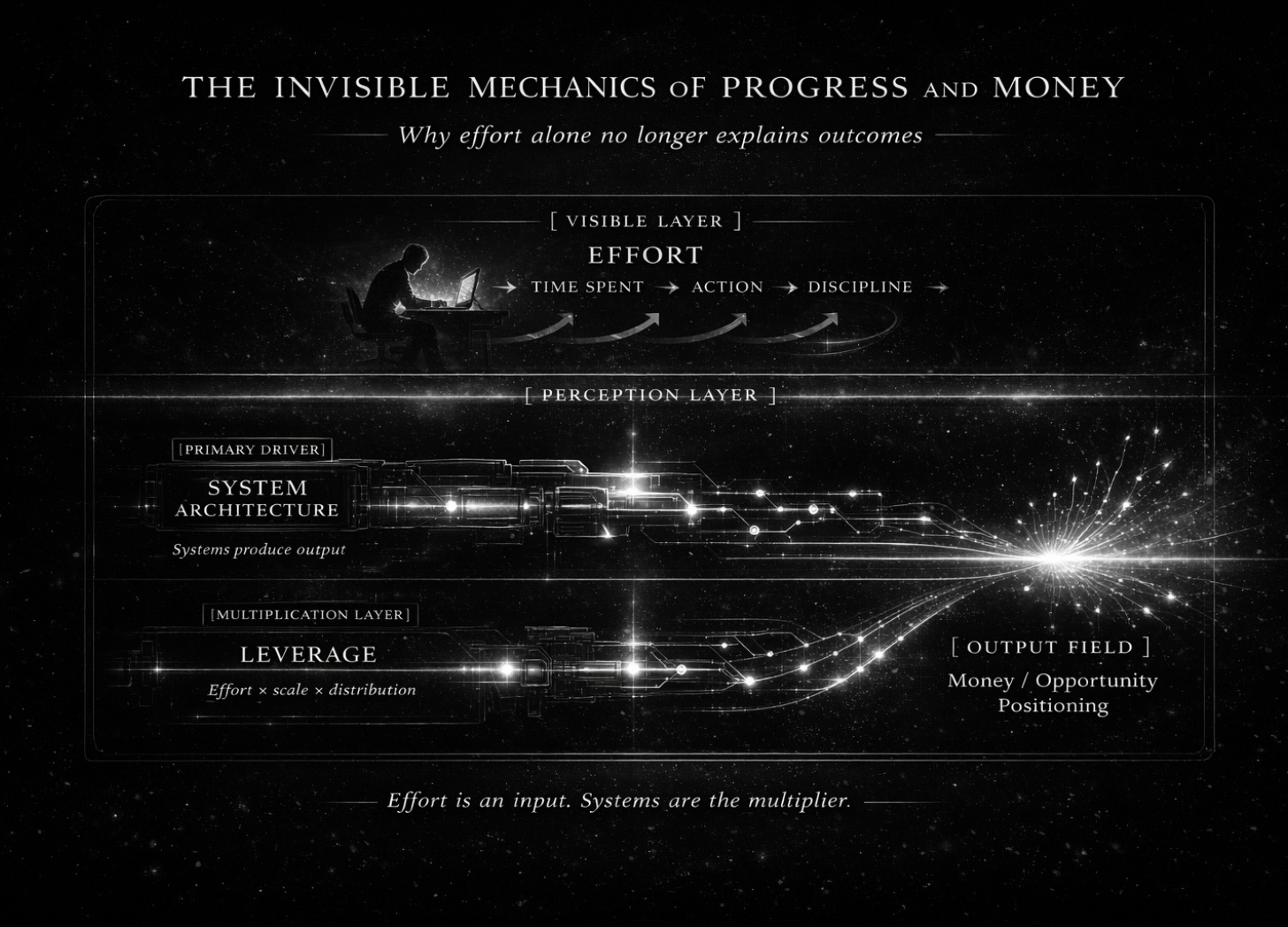
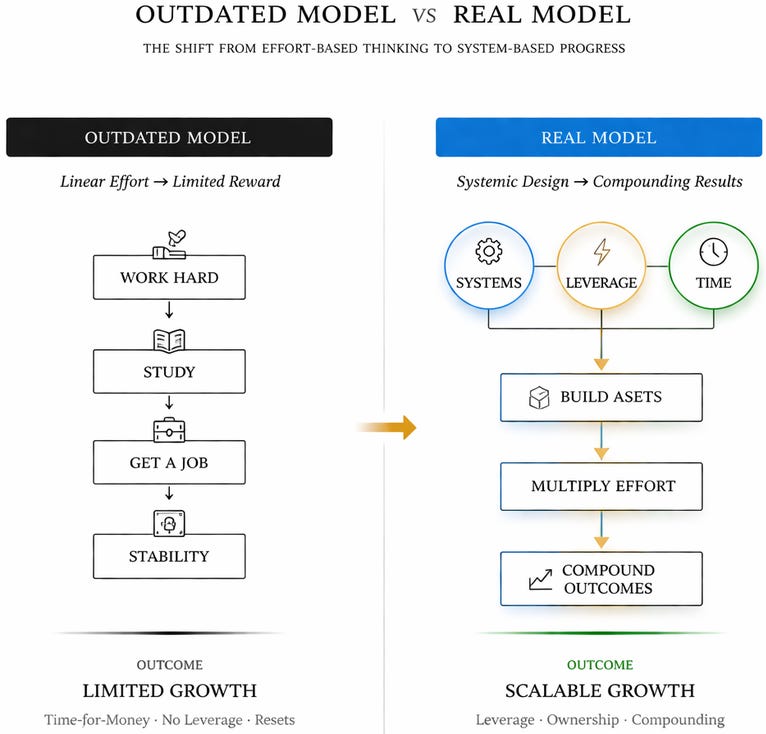
Most people do not understand how progress actually works, and that’s why they cannot get ahead. It is not a matter of intelligence, effort, or discipline, but a lack of visibility into the mechanisms that produce results. People grow up under a model where working hard leads to reward, studying leads to stability, and being responsible leads to improvement. That model was once largely true. However, the system we are operating within no longer functions that way. The rules changed, but the instructions did not, and many are failing to adapt to the world that is coming.
The Real Structure of Outcomes
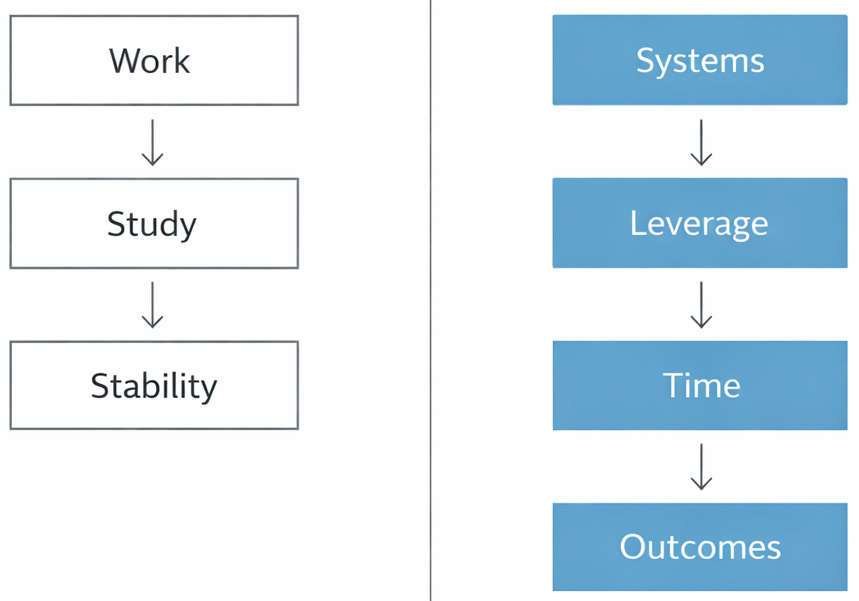
In the current structure, outcomes are not driven by effort alone, but by systems, leverage, and time. Systems produce money. Leverage multiplies effort. Time compounds outcomes. Effort is an input, not a multiplier. A person trading time for money operates linearly, where each hour produces roughly the same return. A system works whether the person is present or not. Leverage allows one unit of effort to produce ten, a hundred, or a thousand units of result. Time, applied to the right vehicle, compounds rather than adds. The gap between someone running a system and someone relying on effort widens over time, often dramatically.
When this shift is not seen, a person can apply effort for years and remain in the same position. The work is real. The inputs are real. The model is wrong.
The Wrong Game
Many people are not failing due to lack of ability, but because they do not know what game they are playing. Someone may believe the correct path is to find a stable job and optimize within it, while the actual game involves building systems, creating assets, using digital distribution, and owning instead of renting time. Optimizing the wrong game still produces the wrong outcome. A person can be disciplined and consistent and still make no structural progress because the vehicle they chose cannot take them where they want to go.
If this alternative frame is never discovered, the individual optimizes a path that does not lead to scalable outcomes. They are not choosing the wrong direction. They are unaware another direction exists. Unknown unknowns quietly shape their trajectory, creating steady motion in the wrong direction that feels like progress.
Misinterpretation of Results
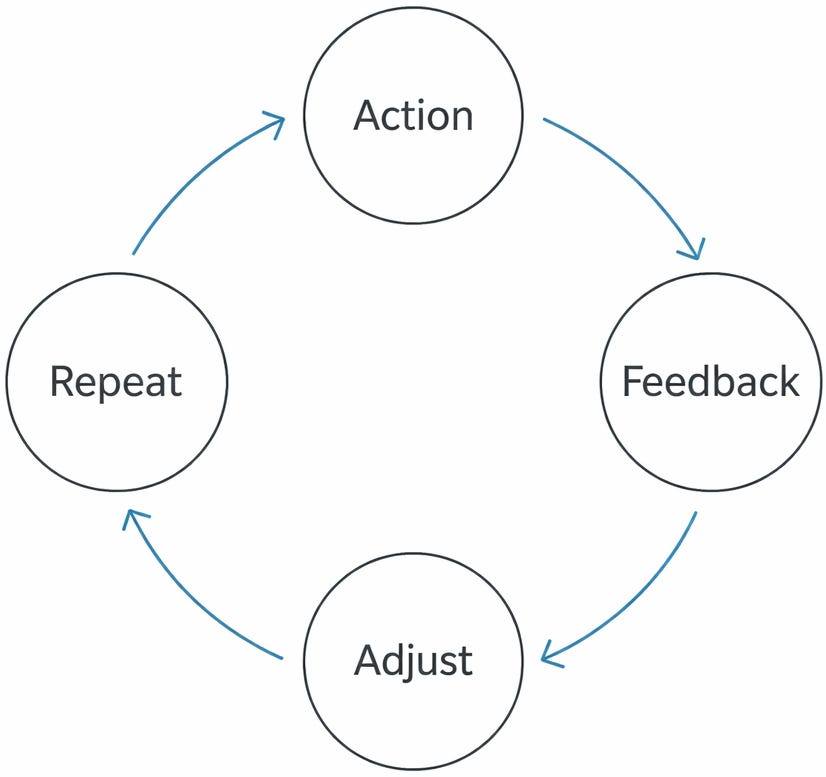
Because these mechanics are not visible, outcomes are often interpreted incorrectly. When people observe others achieving higher income or freedom, they attribute it to intelligence, talent, or luck. While luck exists, it is often misunderstood. What appears to be luck is frequently the result of a process: imperfect action, repeated attempts, feedback, iteration, and time sustained long enough for results to compound.
Most people do not see this process. They only see the outcome, and without visibility into how it was produced, they interpret it as random or unattainable.
The Pattern of Progress
Progress rarely comes from certainty. It tends to follow a pattern of trying something, failing, adjusting, and repeating over extended periods. However, many individuals believe they must first identify the correct path before taking action. This leads to waiting, overthinking, and hesitation. Those who move forward are not necessarily more informed. They are willing to act without having all the answers, allowing feedback to shape direction instead of waiting for clarity in advance.
The Role of Attention
Attention plays a critical role in this process. Modern life continuously absorbs attention through social media, entertainment, and constant information streams. This is not accidental. Platforms are engineered to capture and hold attention because it is the product being sold. Attention is a finite resource. When it becomes fragmented, it becomes difficult to sustain focus on long-term objectives.
Without sustained attention, it is nearly impossible to build systems, and without systems, progress does not compound. A person who cannot hold focus long enough to learn, build, or iterate cannot close the gap, regardless of intention. This creates a situation where people are not only unaware of the correct mechanics, but are also operating in an environment that makes it difficult to act on them even when they begin to understand them.
Late Realization
Because these mechanics are not visible early on, many people only recognize them later in life. At that point, patterns become clear. Hard work alone does not scale. Income from jobs is limited. Systems produce leverage. Ownership allows continuity. However, by the time these realizations occur, years have already been spent operating under different assumptions.
The realization is not the problem. The cost of arriving at it late is. Time that could have been used to build compounding systems was spent in linear arrangements. The realization does not erase that cost. It only makes it visible.
The Shift in Question
The key change happens when the question changes. Instead of asking how to work harder, the focus shifts to understanding what kind of system can be built to produce results without constant effort. This leads to different actions: building businesses, creating content systems, developing digital assets, and producing intellectual property or scalable services. These structures allow effort to extend beyond the moment it is applied.
Compounding Decisions
Once these mechanics become clear, decisions begin to change. People start recognizing where leverage exists, where compounding can occur, where ownership matters, and where attention should be directed. These decisions may seem small in isolation, but over five to ten years they accumulate into significantly different outcomes.
What appears from the outside as unusual progress is not randomness. It is the result of operating with a different understanding of how the system works.
The Laws of Progress
Progress follows repeatable patterns that become visible once understood. These can be described as laws of progress, not in a moral sense, but as recurring dynamics that shape outcomes.
Effort without direction produces little progress because it becomes scattered across unrelated activities. Many people work hard, but their effort is distributed across short-term decisions and reactive behaviors that do not connect or compound. Each action may feel productive, but over time nothing structurally changes because none of the effort was directed at the same target long enough to accumulate.
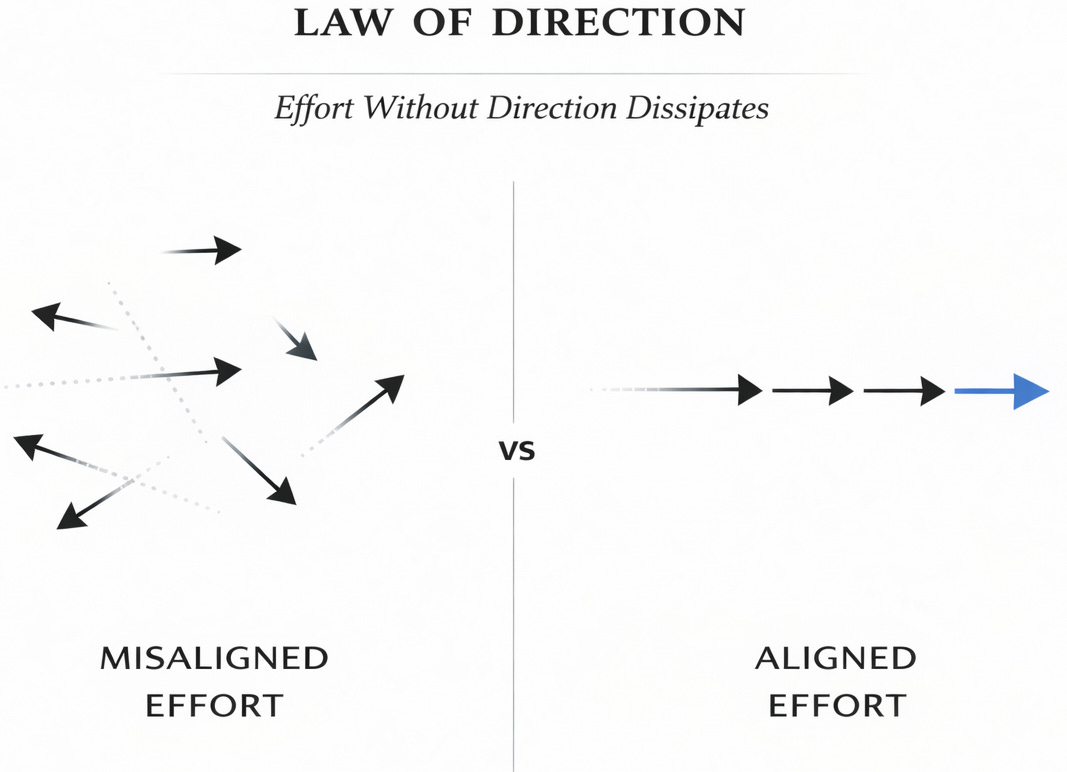
Without direction, effort dissipates. This is a painful trap because it feels like work. The exhaustion is real. The sacrifice is real. But busyness and progress are not the same. When direction is established, effort aligns. Tasks begin to serve the same objective, decisions become filtered, and energy concentrates on what matters. This alignment allows small actions to build over time, connecting into relationships, opportunities, and transferable skills.
Two individuals can apply the same effort for years and end up in entirely different positions because one had a clear trajectory while the other did not. The difference is not talent or luck, but direction.
The Law of Imperfect Action
Progress does not require certainty. In most cases, certainty is not available at the beginning. The absence of certainty often leads people to wait, but for meaningful pursuits, clarity is produced by moving, not by thinking. The process unfolds as action, feedback, and adjustment.
Each cycle produces real information that improves the next attempt. The barrier is the belief that the correct path must be identified before acting. This leads to hesitation while others accumulate feedback cycles. Waiting for the right moment is often avoidance of being wrong. Being wrong early is cheap. Being wrong late, after years of inaction, is costly.
Those who move forward are not necessarily more informed. They are willing to engage in the process, understanding that the path reveals itself through contact and that momentum produces information that stillness cannot.
The Law of Compounding
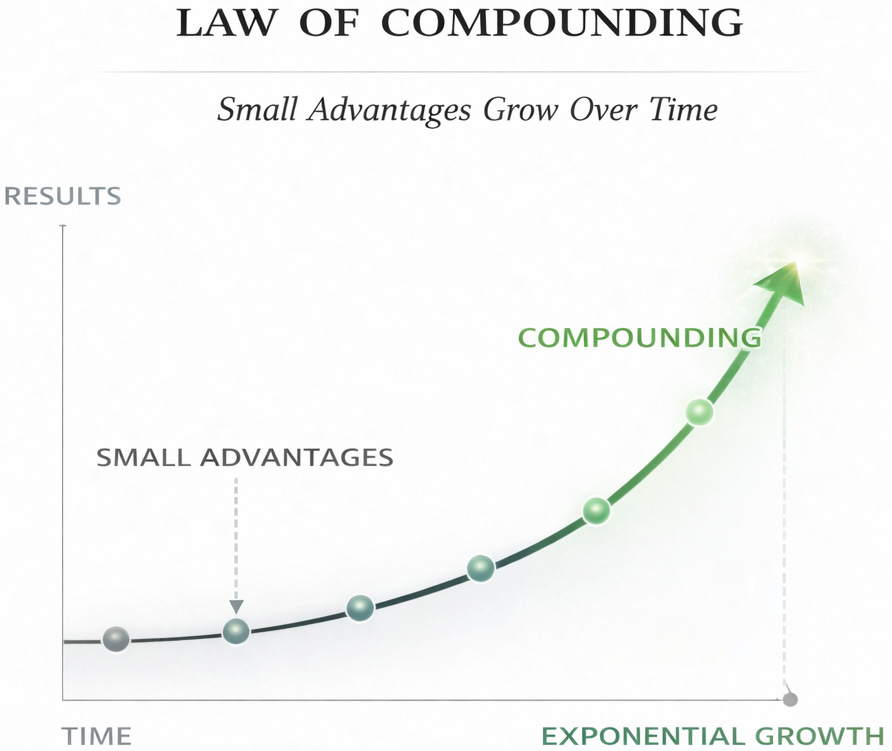
Small advantages, sustained over time, grow into significant differences. This applies to money, knowledge, skills, reputation, networks, and audience. Compounding is not visible early, which leads many to abandon the process before it produces results. Persistence is required because the effects only become visible later.
The Law of Leverage
Effort alone does not scale. A person has a fixed number of hours, which creates a ceiling on output. Progress accelerates when effort is combined with leverage. Labor allows others to contribute. Capital allows money to generate more money. Code enables automation. Media enables distribution at scale.
In the current environment, code and media allow individuals to achieve outcomes that previously required large teams. The barrier to leverage has never been lower, which means the cost of operating without it has never been higher. The question is not whether leverage is accessible, but whether it is being intentionally built into how one works.
The Law of Ownership
Those who own systems tend to accumulate wealth, while those who sell time remain constrained. Ownership includes businesses, intellectual property, equity, royalties, digital assets, and audiences. The defining characteristic is continuity. Value continues to be produced even when direct effort is not being applied.
The Law of Attention
In an environment where information is abundant, attention becomes the limiting factor. The problem is no longer access, but competition for a fixed amount of human focus. The ability to capture and direct attention determines whether ideas, products, or systems gain visibility.
A superior product without attention loses to an inferior product with it. Quality is necessary but no longer sufficient. Without attention, valuable outputs remain unseen. Distribution becomes essential. Building and distributing are distinct skills, and treating them as one buries good work. Those who understand this design both together.
Attention becomes a form of leverage. Those who earn and direct it gain a compounding advantage. Those who ignore it produce in isolation and wonder why results do not match effort.
The Law of Environment
The conditions surrounding an individual shape behavior more than motivation alone. Environment includes social circles, cultural expectations, available information, and perceived norms. If someone is surrounded by people who prioritize stability, they are more likely to adopt similar behaviors. If they are in an environment where building systems and leverage is normalized, they are more likely to pursue those paths. Environment does not fully determine outcomes, but it strongly influences direction.
The Law of Time Horizon
The length of time someone is willing to operate without immediate results directly affects their potential for progress. Many evaluate efforts over weeks or months and expect outcomes within that timeframe. Meaningful progress often requires years. Those with longer time horizons invest in assets that compound, such as reputation, relationships, intellectual property, and systems.
The Integrated Pattern
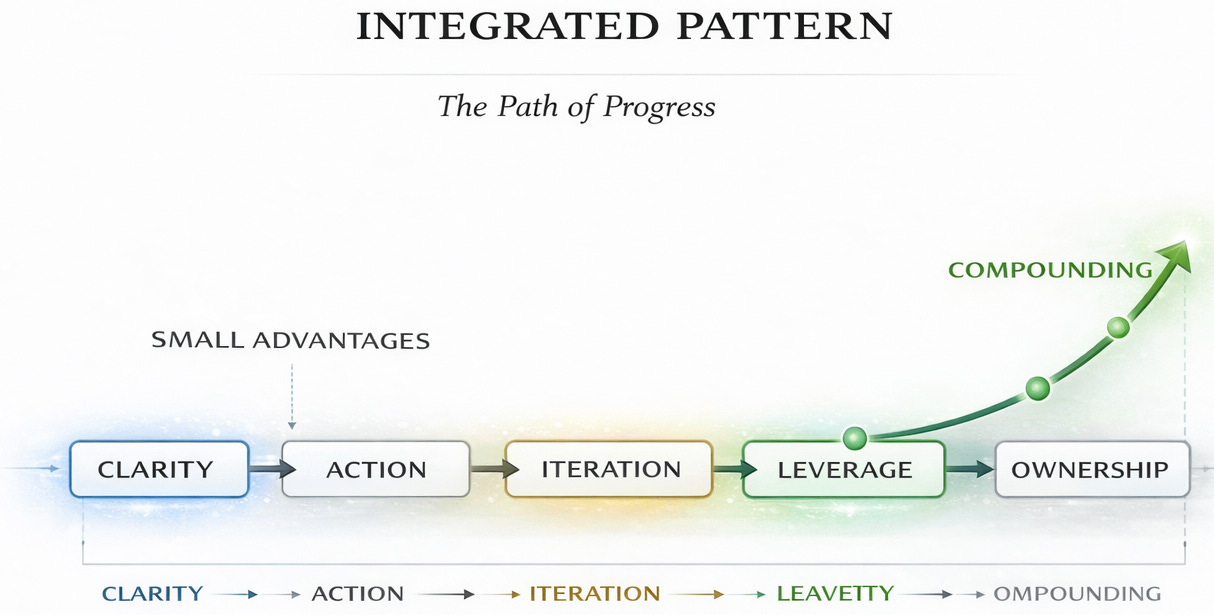
When these laws are viewed together, a pattern emerges. Clarity leads to action. Action leads to iteration. Iteration enables leverage. Leverage produces compounding. Compounding leads to ownership, all operating within a long time horizon.
Most people are not missing effort. They are missing structure. Once these dynamics are understood, decisions align with how the system works rather than assumptions about how it should work. This does not guarantee immediate results, but it changes the trajectory.
Why People Stay Stuck Even When Awareness Exists
Even when awareness develops, many remain in the same position. The issue is not only lack of understanding, but forces that prevent movement even with partial awareness. These operate at psychological, behavioral, and environmental levels.
Short-term thinking causes people to evaluate progress over weeks or months. When results do not appear quickly, they change direction or stop, preventing compounding. Risk aversion keeps individuals within predictable systems rather than growth-oriented ones. Identity shapes behavior, limiting what is pursued. Social pressure reinforces conventional paths. Cognitive overload fragments attention, leaving little space for reflection. Structural constraints such as financial pressure slow progress. Learned helplessness reduces effort after repeated setbacks without visible results.
The Behavior of Those Who Move Forward
Those who move forward tend to experiment, remain curious about systems, tolerate ambiguity, and operate over longer time horizons. These behaviors gradually expand what is possible.
The Shift in Perception
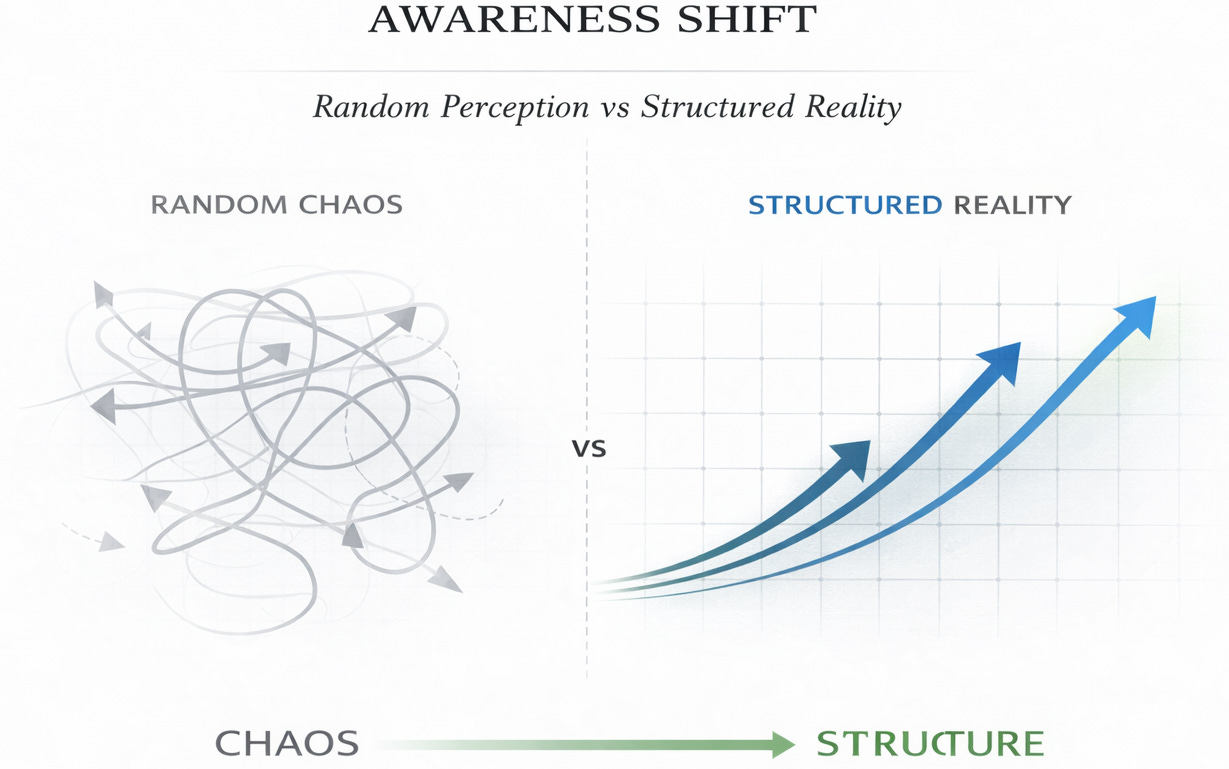
As awareness deepens, reality feels less random and more structured. What appeared as luck reveals itself as the result of behaviors compounding over time. What looked like overnight success shows years of system building and leverage accumulation.
Actions are no longer taken blindly, but aligned with how systems function. Decisions carry informed uncertainty rather than randomness. Constraints remain, but navigating them with structural awareness produces different outcomes than navigating them blindly.
Over time, this shift allows individuals to interact with their environment more deliberately, shaping their trajectory. Progress stops feeling like something that happens to a person and becomes something they participate in constructing. Once this shift occurs, it is difficult to unsee.