


Watch the full breakdown below
Skills Exist, But They Are Misunderstood
Even if they think they don’t, most people already possess a functional set of skills, but they fail to recognize them because of how those skills were acquired. These are not theoretical abilities learned in isolation. They are lived, applied capabilities that they developed through exposure to real environments, repeated execution, and interaction with systems that required performance.
By just basically living life, you learn stuff
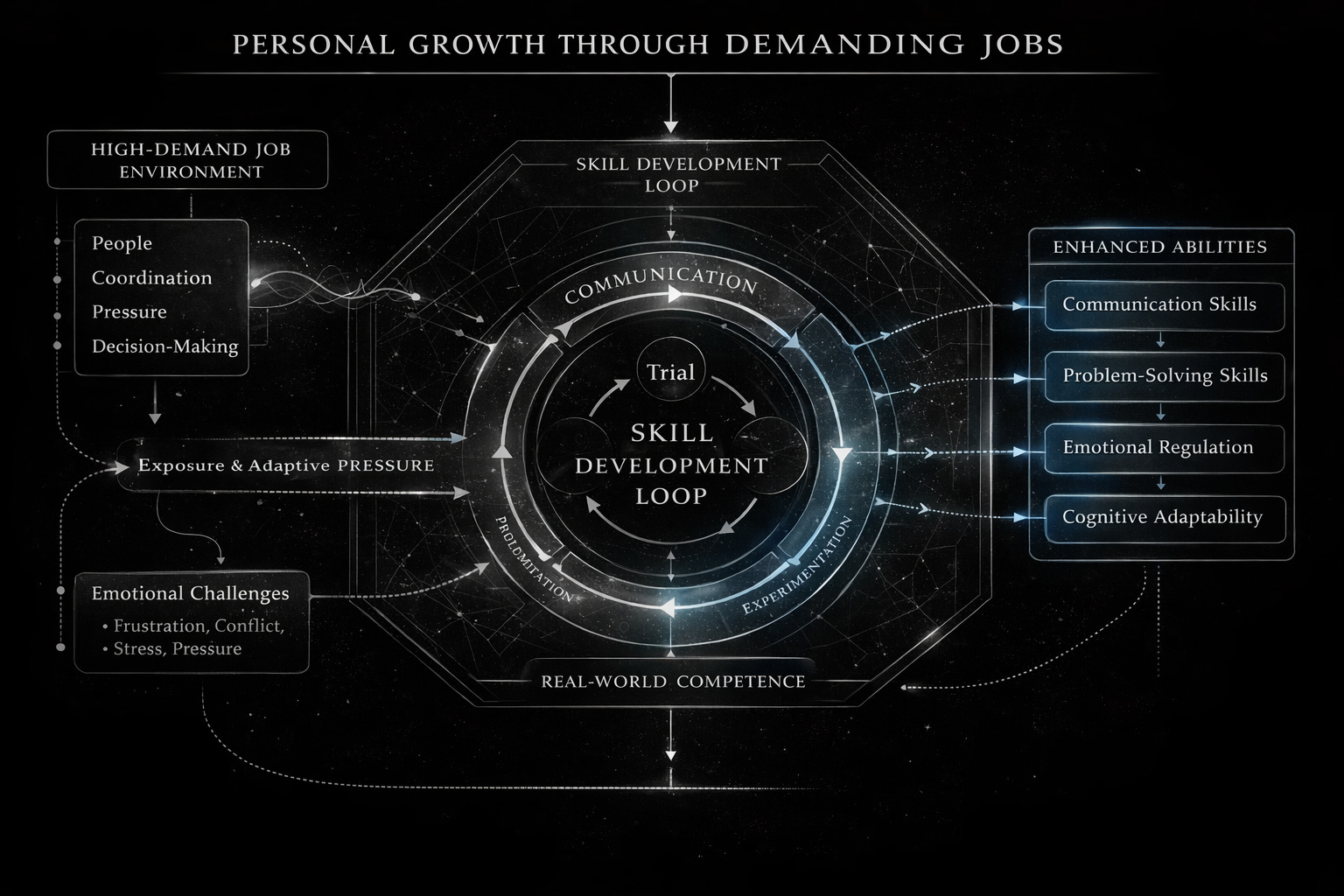
Working inside jobs, especially those involving people, coordination, pressure, or decision-making, forces individuals to develop communication, problem-solving, emotional control, and pattern recognition skills.
These are jobs where the environment itself forces you to grow because of what you’re constantly exposed to.
Examples:
Sales (especially outbound / closing)
Customer service under pressure
Emergency services
Trading / fast-paced decision environments
Entrepreneurship
What you develop here:
Communication under uncertainty
Emotional control
Fast decision-making
Reading people (pattern recognition)
Handling rejection / chaos
These skills are transferable across almost any domain.
These skills are not consciously tracked, but they accumulate over time as a byproduct of participation in real-world structures.
Then you have specific skill jobs where you’re learning clear, structured, repeatable skills.
Examples:
Programming
Accounting
Graphic design
Engineering
Operating machiner
Data analysis
What you develop here:
Precision
Technical knowledge
Systems thinking (within a defined scope)
Execution accuracy
These skills are valuable but narrower.
You’re learning how to do something specific, not necessarily how to adapt outside that domain.
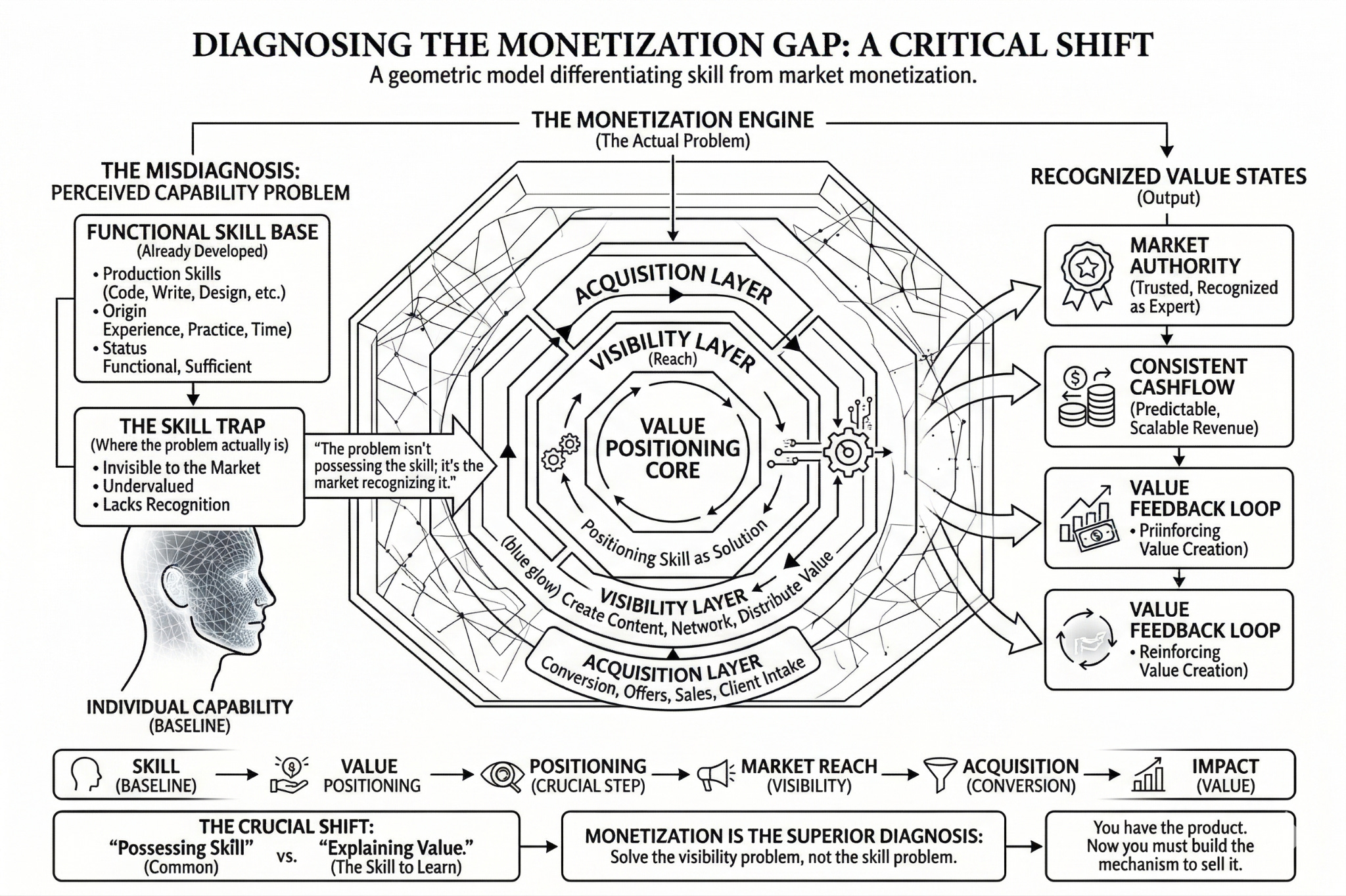
The nature of this skill acquisition is important because it explains why it is often overlooked. When skills are developed gradually through repetition and necessity, they do not feel like distinct assets (meaning something YOU have learned specifically). They feel normal. Handling customers, navigating workplace dynamics, solving problems under constraints, and adapting to different environments becomes part of daily function rather than something identified as valuable. Over time, this creates a disconnect between your actual capability and perceived capability.
People do not lack skills; they lack visibility into the skills they have already built.
Stop thinking your experience is tied to roles or industries. What you know is what you know, and you can learn how to express it for yourself, not just for an organization. In most cases, people do not need to start from zero; they have to learn to translate their accumulation of experience into something visible, defined, or deployable.
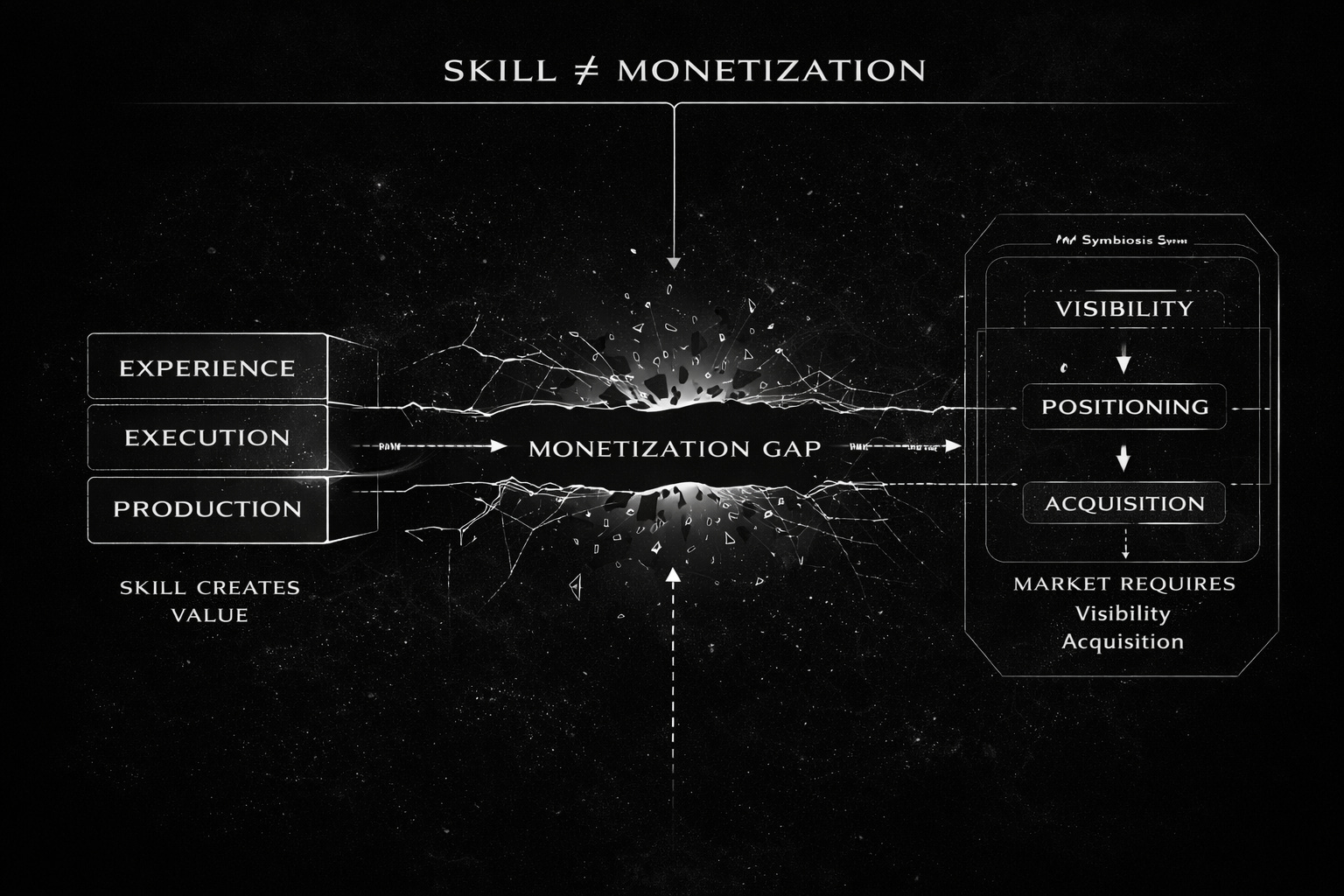
Having a skill ≠ knowing how to turn that skill into money
The Real Separation
Skill Possession
“I can do the thing”
vs
Skill Monetization
“I can turn the thing into income consistently”
These are two completely different games.
Because monetization requires a completely different stack.
Most of the time, people don’t have a capability problem. Most people already operate with a functional base of production skills developed through experience. So you need to diagnose yourself correctly.
The gap exists on the monetization side. You have to learn how to monetize a skill you have by understanding how the market of visibility and acquisition works.
Monetization is the ability to take that capability and convert it into a clear, exchangeable form. Without this second layer, skills remain internal and unstructured. They exist, but they are not visible, not articulated, and not accessible to the market. As long as capability stays embedded inside experience, it cannot be evaluated externally. And if it cannot be evaluated, it cannot be paid for.
Monetization operates as a separate system layered on top of what already exists.
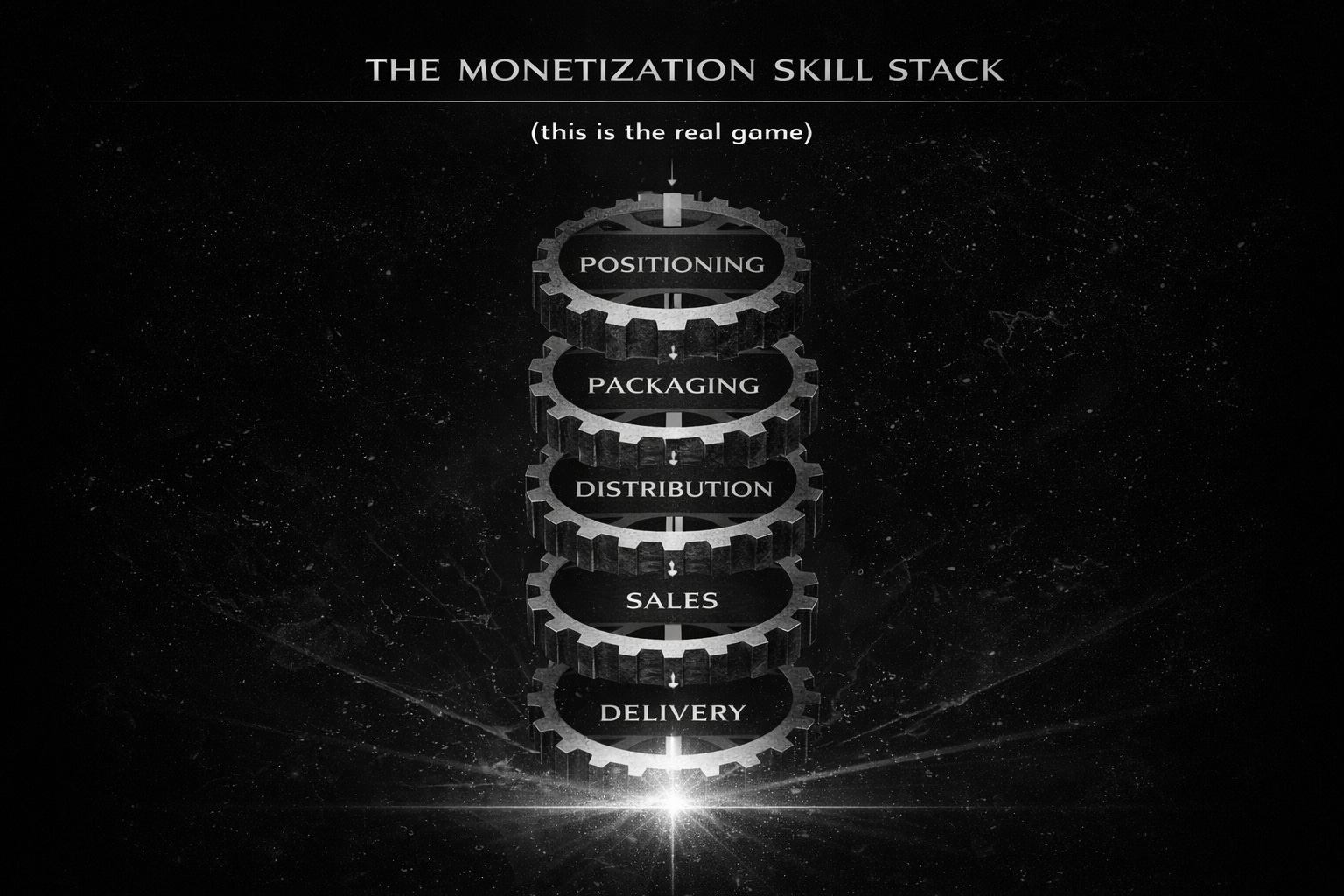
Most people have skills that can be monetized but weak monetization knowledge. Very few are good at both being very good at a specific skill and knowing how to monetize it properly.
So yes, skill on its own does not generate income. It must be transformed into a packaged outcome, exposed through distribution, and connected to demand.
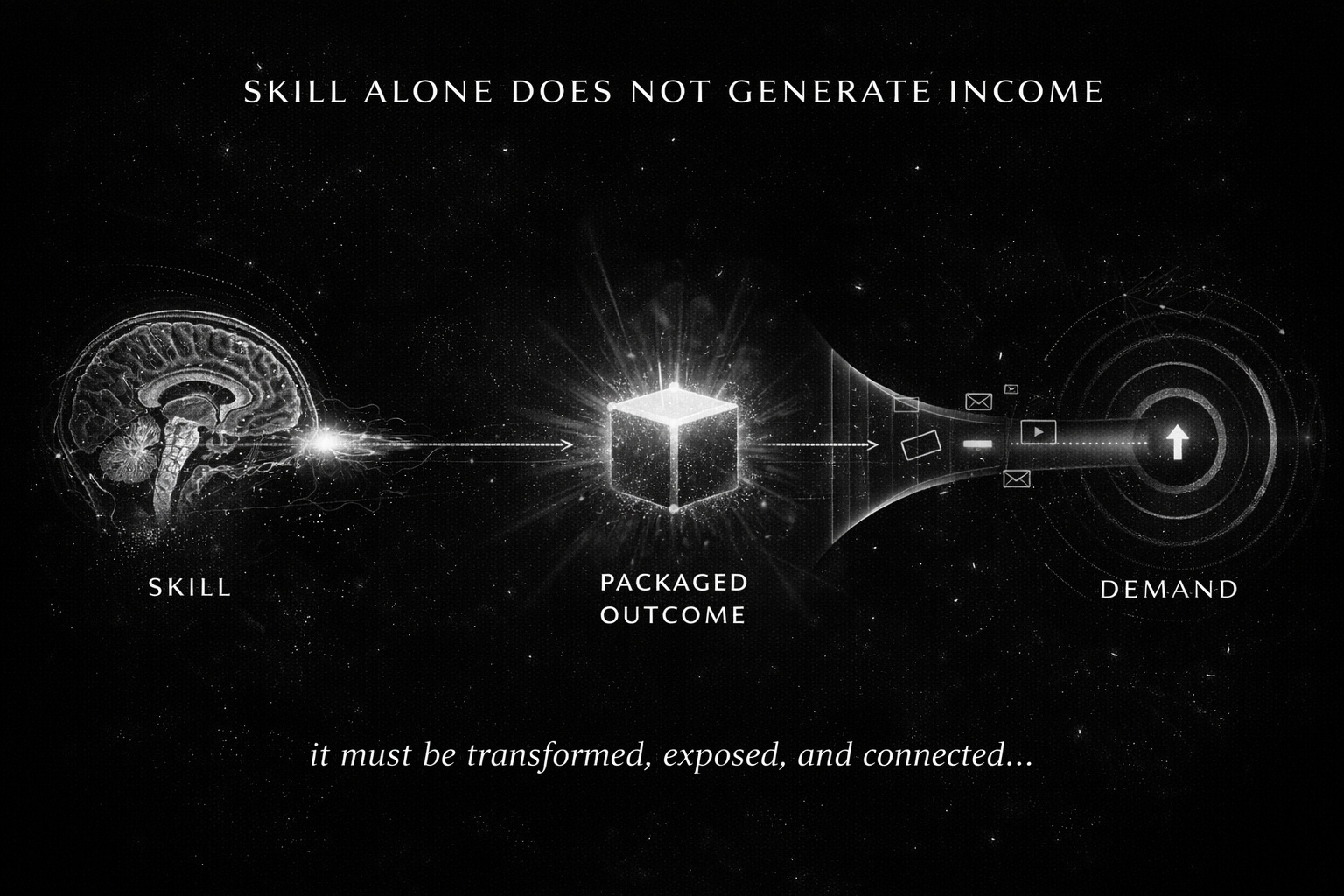
Only then does it convert into money. This is why many capable individuals remain stuck, while less capable ones generate income. The irony is that someone can be less skilled than you, but they put themselves more out there and make more money than you because they have more exposure. The market does not reward what it cannot detect.
Value must be made legible before it can be exchanged.
Now, this does not mean that you need mass levels of attention. You don’t need to reach everyone; you need to reach the specific group of people who already have the problem you solve. When visibility is targeted, even a small audience can produce meaningful economic results because the relevance is high. Without that alignment, even large exposure fails to convert, because the signal is not reaching the correct recipients.
Love this. Most people don’t have a talent problem; they have a visibility problem. We’re all sitting on 'lived skills' that we just haven't labeled or packaged yet. Value doesn't count if it's invisible to the people who need it!
This is a really sharp breakdown—you’re naming something a lot of people feel but can’t quite articulate. The distinction between having skills and monetizing them is where most people get stuck, and you explain it in a way that makes it obvious in hindsight. The idea that lived experience creates real capability—but not necessarily visible value—is especially strong. It challenges that default belief that people need to “start over,” when in reality they need to reframe and translate what they already have.
I’m curious—when you’re working with someone who clearly has strong underlying skills but zero monetization structure, what’s the first concrete step you guide them through to make their value “legible” to the market in a way that actually leads to their first paid opportunity?